 Qawaid 9 · The 9 rules of spelling
My Arabic Letters Book
Know your 29 letters: their names, their shapes, and how they change when they join. By Ustaz Hamza.
Hello, little reader
The Quran is built from 29 letters. Learn them, and you hold the key to every word in it.
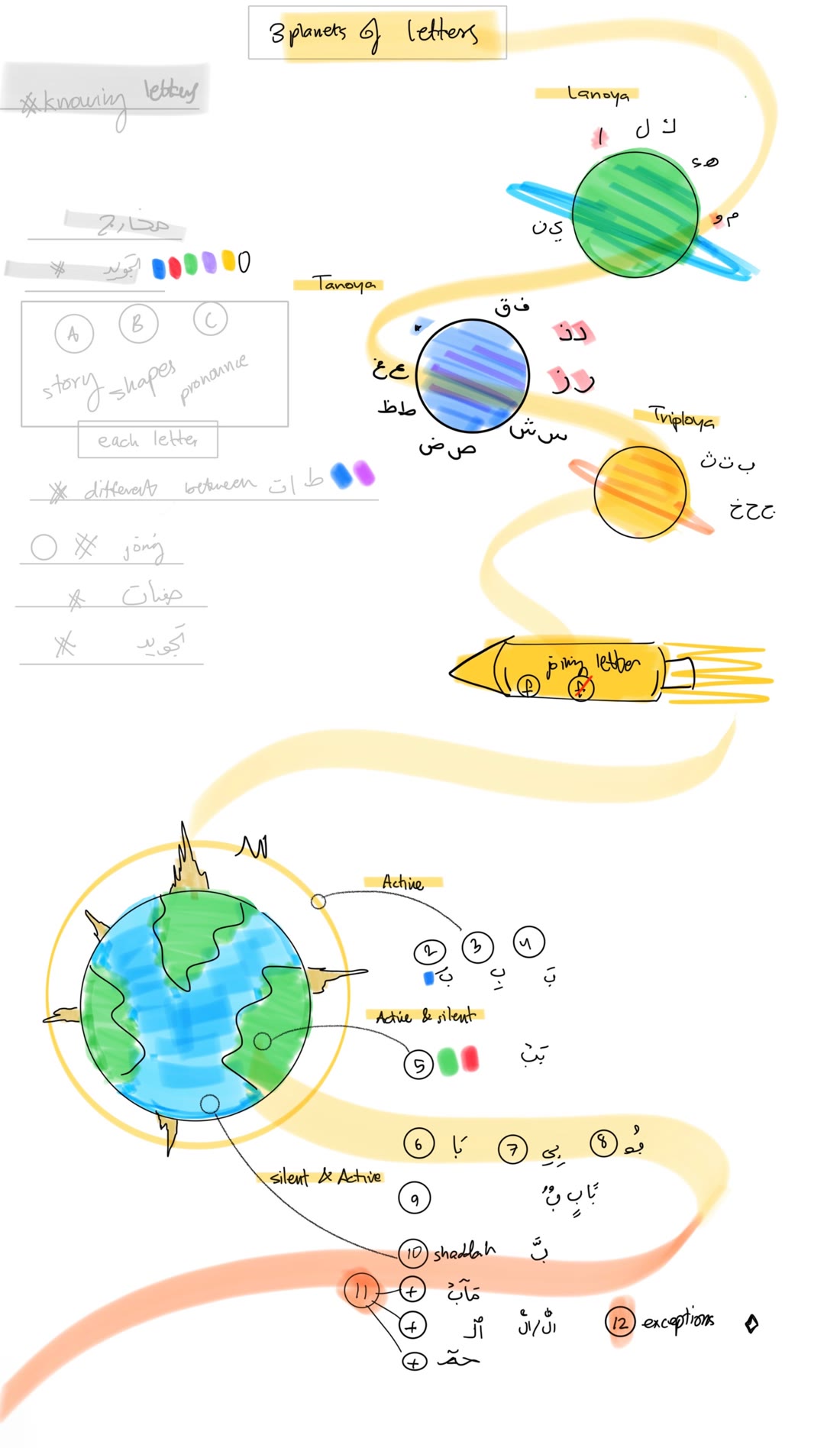
To know an Arabic letter, you learn 3 things about it. Take Jeem:
This book is all about numbers 2 and 3: what each letter looks like, and how it changes when it holds hands with other letters. Your eyes do the learning here.
What about sounds? Pronunciation can't be learned from written words. You need to hear it and see it. Learn how to say each letter from the videos in the Qawaid 9 course at ustazhamza.com.
By the last page, you will know all 29.
For parents: this book follows the first part of Qawaid 9: The 9 rules of spelling (the letters), lesson by lesson: The Arabic letters, Lonely letters, Twins and Triplets. Sit with your child for 10 minutes a day. You don't need to read Arabic yourself to help.
Do not rely on transliteration to pronounce Arabic letters.
1How to use this book
Learn 3 to 4 new letters a week, and review the old ones every day. For each new letter:
- Name itLearn the letter's name. Watch the course video to hear it said.
- Learn all its shapesOn its own, and at the start, middle and end of a word. Count its dots too.
- Find it in the QuranDo the Quran hunt: spot it on a real page of the Quran.
- Test it againAfter you learn the next letter, come back and test yourself on this one.
Stuck, or want to hear a letter? Watch the matching lesson in the Qawaid 9 course at ustazhamza.com.
2Meet the 29 letters
Arabic is read from right to left, so the alphabet starts on the right.
The 3 types of letters
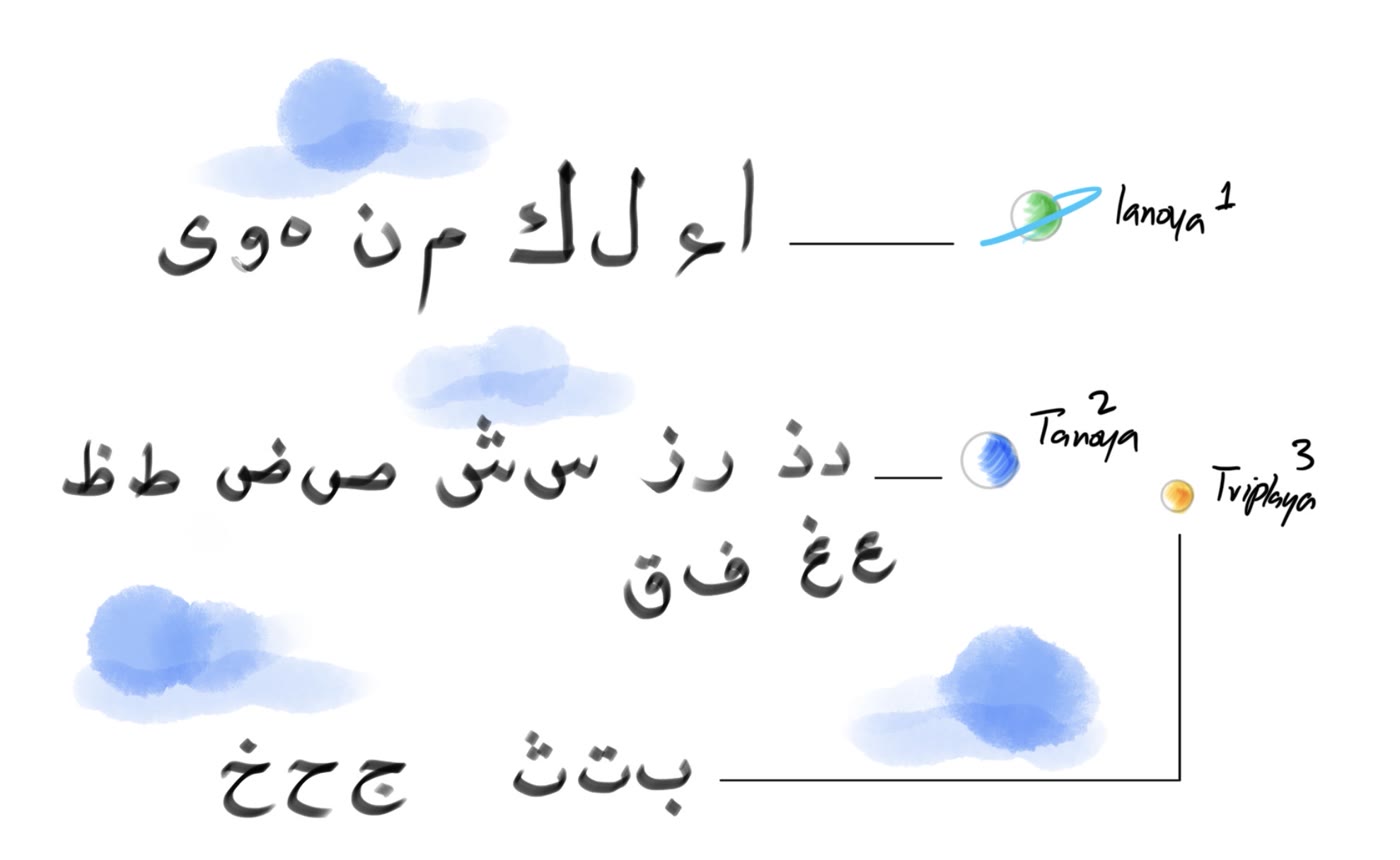
The secret of this book: many letters share the same body and differ only by their dots. Learn the body once, then just count the dots.
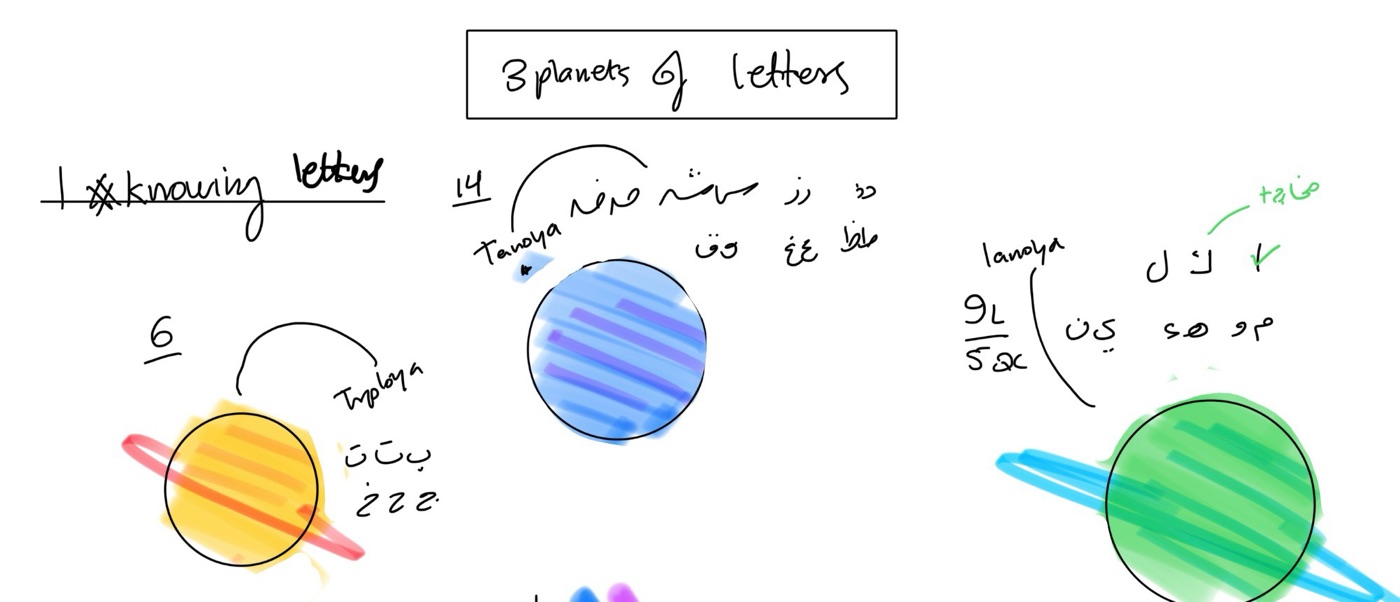
9 lonely + 14 twins + 6 triplets = 29
3Non-friendly letters
Look for this sign. It means the letter is non-friendly.
Most letters hold hands with the letters on both sides of them. 6 letters are non-friendly: they hold hands with the letter before them, but never with the letter after them. The next letter has to start on its own.
Arabic is always read and written from right to left. So "the letter before" is the one on the right, and "the letter after" is the one on the left.
2 rules for joining
- Inside a word, every letter joins the next one. In any word in the Quran, all the letters hold hands. The only exception is a non-friendly letter: it refuses to join the letter after it.
- The last letter of a word joins nothing after it. The word has ended, so there is nothing to hold. The space between two words tells you nothing about friendly or non-friendly letters.
So only a gap inside a word tells you there's a non-friendly letter. A gap between two words doesn't count.
Question: who won't hold hands?
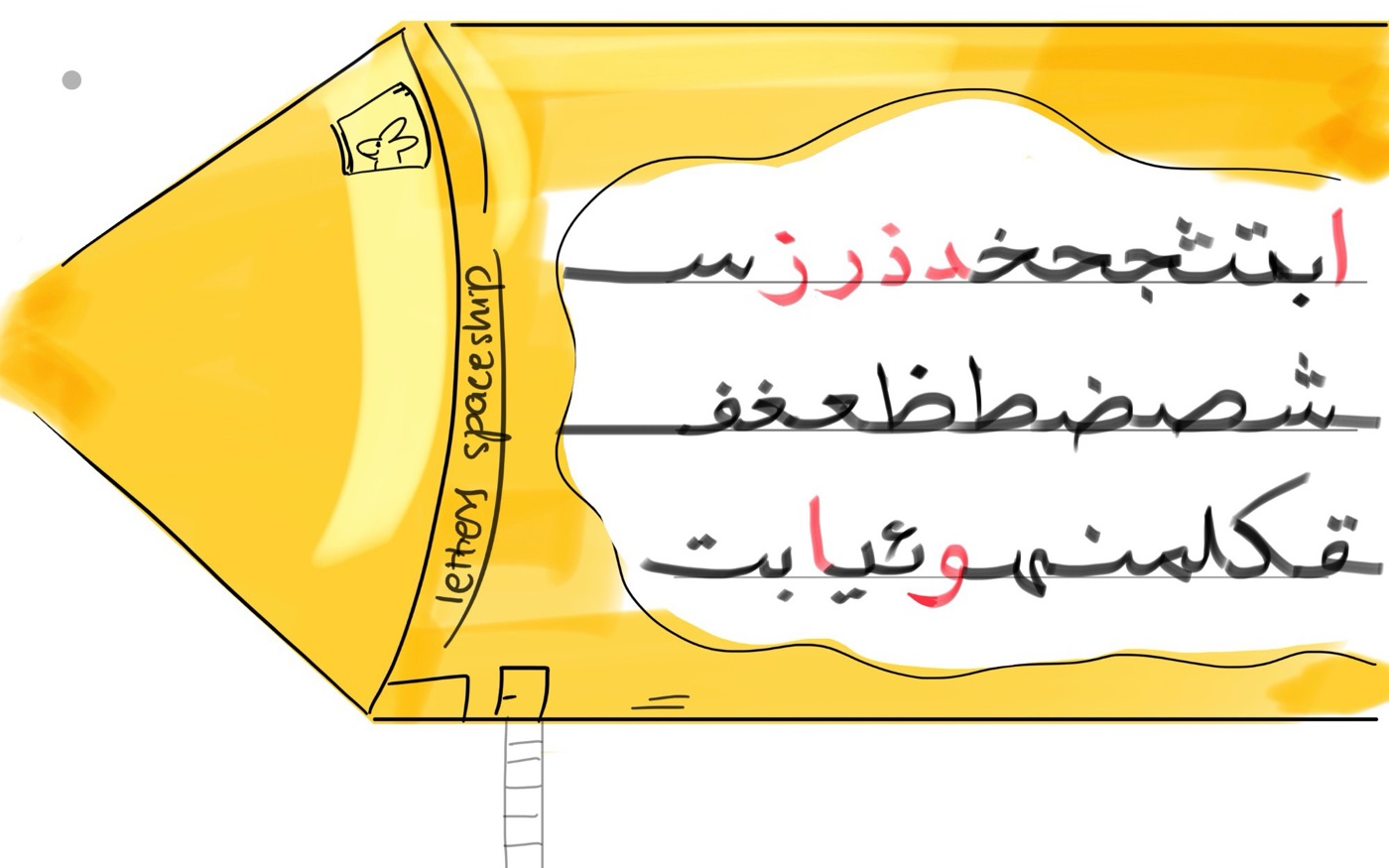
All the letters climbed into the letters spaceship and tried to hold hands. Look closely: which letters refuse to join the letter after them?
Show the answer
The red letters: ا د ذ ر ز و. Each one holds the letter before it, then lets go, so the next letter has to start on its own. Every other letter stays joined.
Parent tip: to spot a non-friendly letter, look for a gap inside a word, not the space between two words. The letter just before that gap is non-friendly.
4Lonely letters
A lonely letter has a shape all of its own: no other letter shares its body. There are 9 of them. Learn the shape, and you've learned the letter.
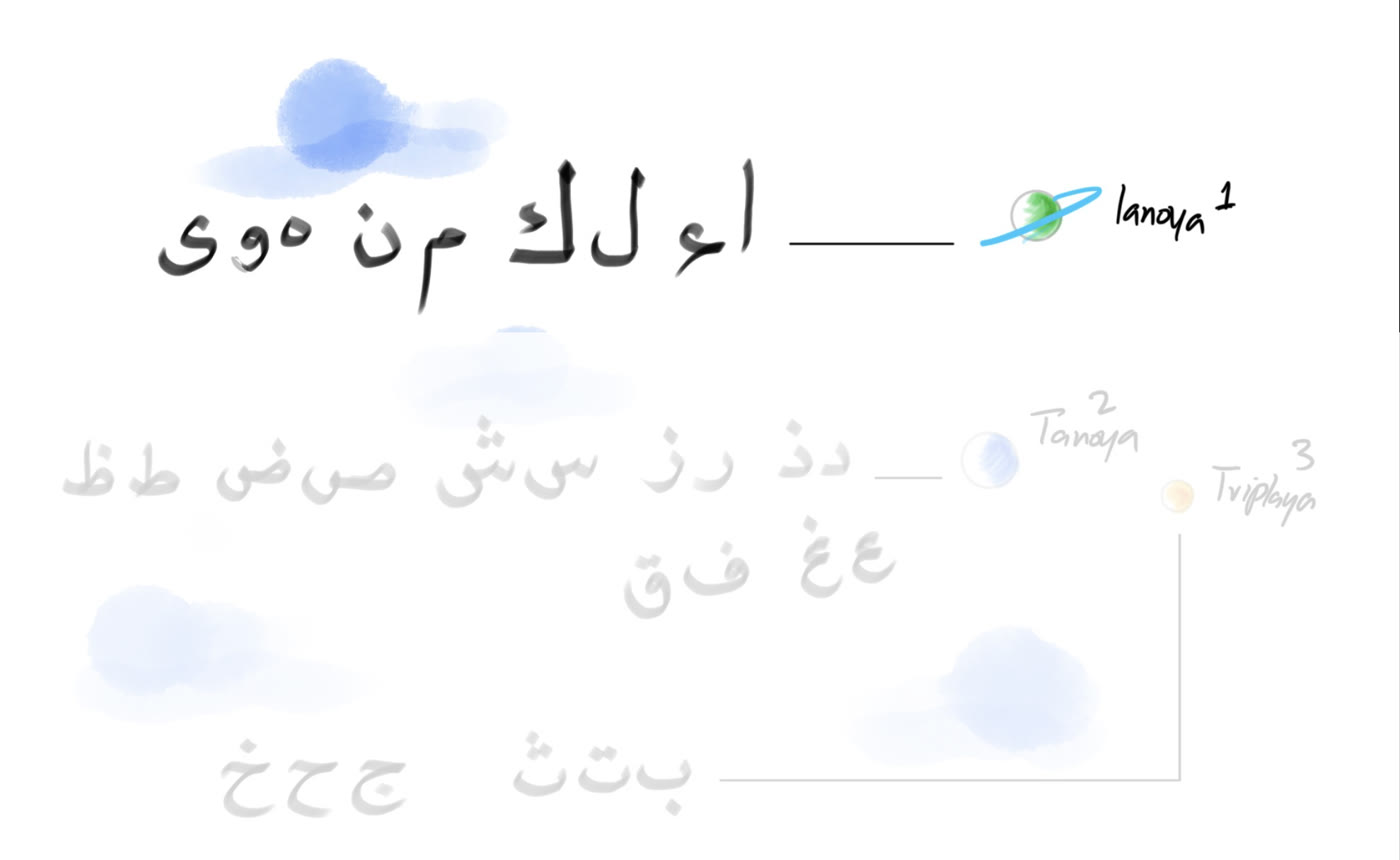
Do not rely on transliteration to pronounce Arabic letters.
5The reason behind it: these letters have no look-alikes, so they are the easiest to start with. Your child gets 9 quick wins on day one.
Try this with your child
- Say a name ("Meem!") and ask your child to point to it.
- Draw each letter big in the air, then small on paper.
- Spot the dots: which lonely letters have dots? (Noon has 1 on top. Yaa has 2 below, except at the end of a word.)
- Play "lonely letter hunt": find every Alif on one page of the Qaedah.
Parent tip: Haa (ه) changes shape more than any other lonely letter. Spend an extra day on its 4 shapes, and don't mix it up with the Haa (ح) your child will meet in the Triplets: they look nothing alike.
7Twins
Twins are 2 letters with the same body. Only the dots tell them apart. There are 7 pairs: 14 letters. Learn the body once, then count the dots.
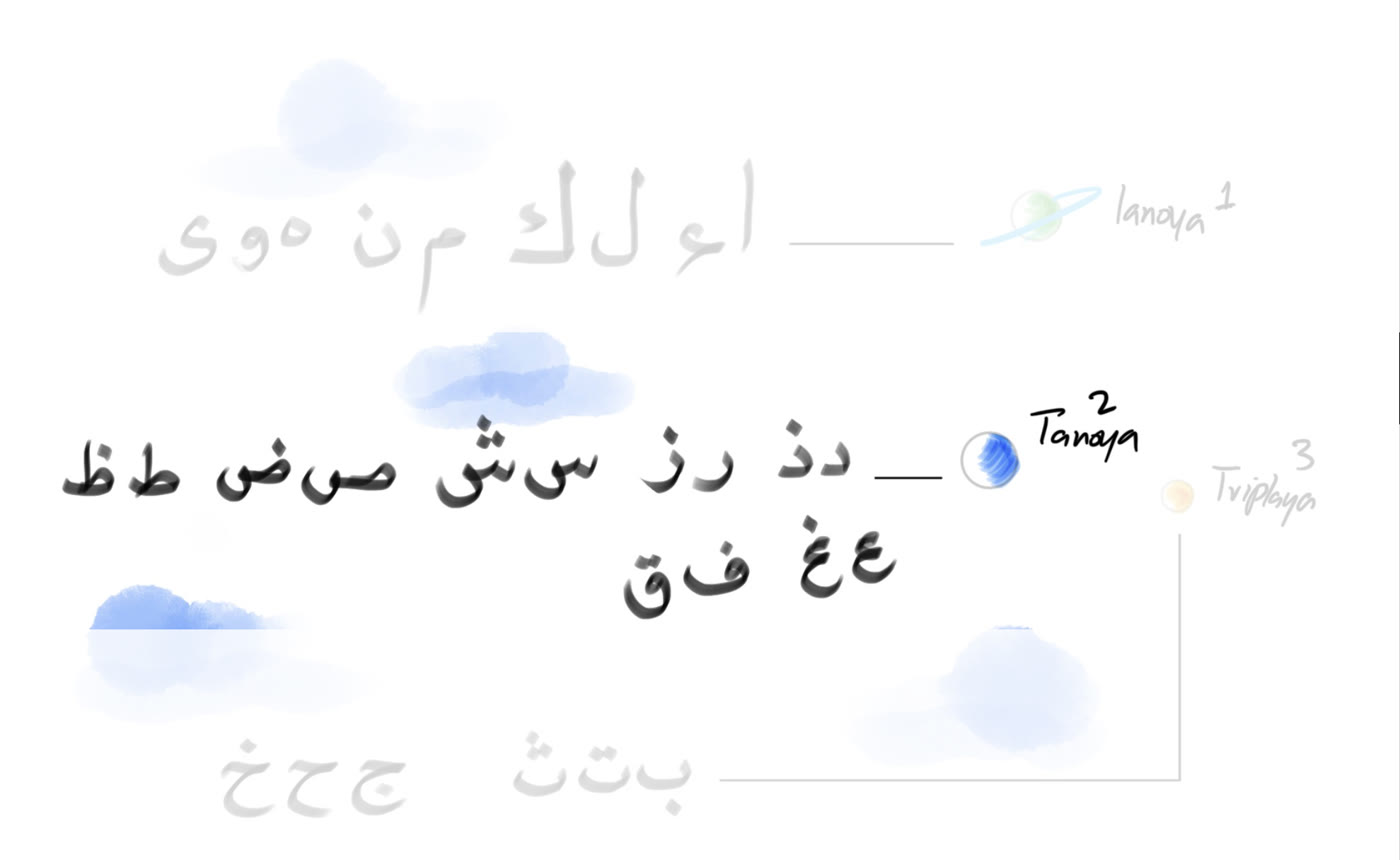
Do not rely on transliteration to pronounce Arabic letters.
8The reason behind it: learning twins together halves the work. Learn the body once, then the dot does the rest.
Try this with your child
- Cover the dots with your finger and ask: "Which twins are these?"
- Point to one twin and ask your child to find the other one.
- Draw a twin's body and let your child add the dot to make the other one.
- Spot the non-friendly twins: د ذ ر ز never join the letter after them.
Parent tip: in 5 of the 7 pairs, the twin with 1 dot on top is the second one. Teach that pattern and your child will spot most twins right away. Faa and Qaaf are the odd pair: count their dots and look at the tail.
10Triplets
Triplets are 3 letters with the same body. Only the dots tell them apart. There are 2 families: ب ت ث and ج ح خ. That's 6 letters.
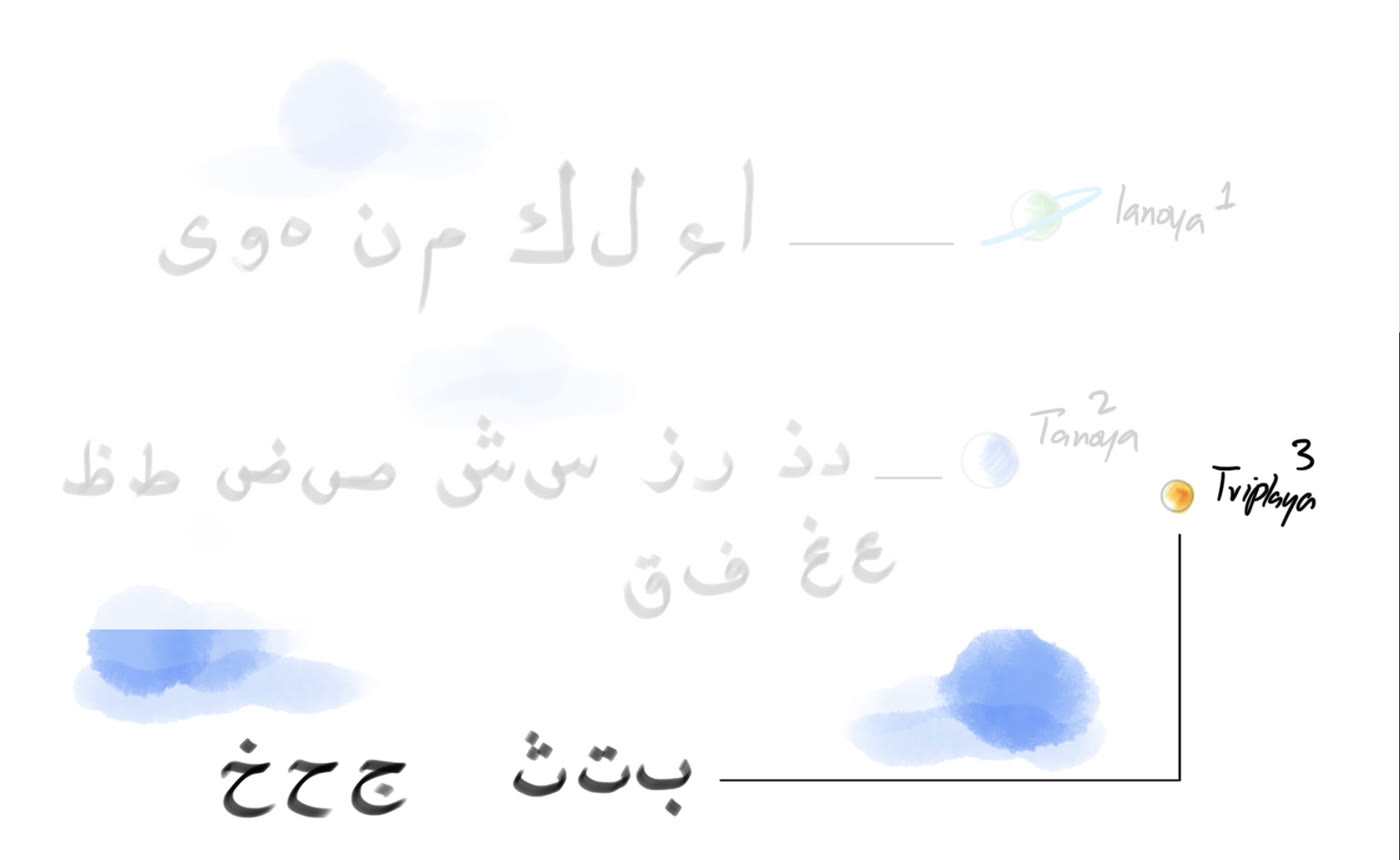
Do not rely on transliteration to pronounce Arabic letters.
11The reason behind it: 3 letters, 1 body. Learn the body once, then count the dots.
Try this with your child
- Cover the dots with your finger and ask: "Which family is this?"
- Play dot detective: where are the dots? Below (ب), on top (ت ث خ), inside (ج), or none at all (ح)?
- Draw a body and let your child add 1, 2 or 3 dots to make each triplet.
Parent tip: when Baa, Taa and Thaa join other letters, their bodies look almost the same, so ask your child to check the dots every time. Jeem, Haa and Khaa only show their belly at the end of a word.
13You've met all 29 letters
9 lonely letters, 14 twins and 6 triplets. You know what each one looks like and how it changes when it joins. Keep testing yourself: go back to any letter after you learn the next one.
Ready for the next step? Continue with Qawaid 9: The 9 rules of spelling at ustazhamza.com.
14